
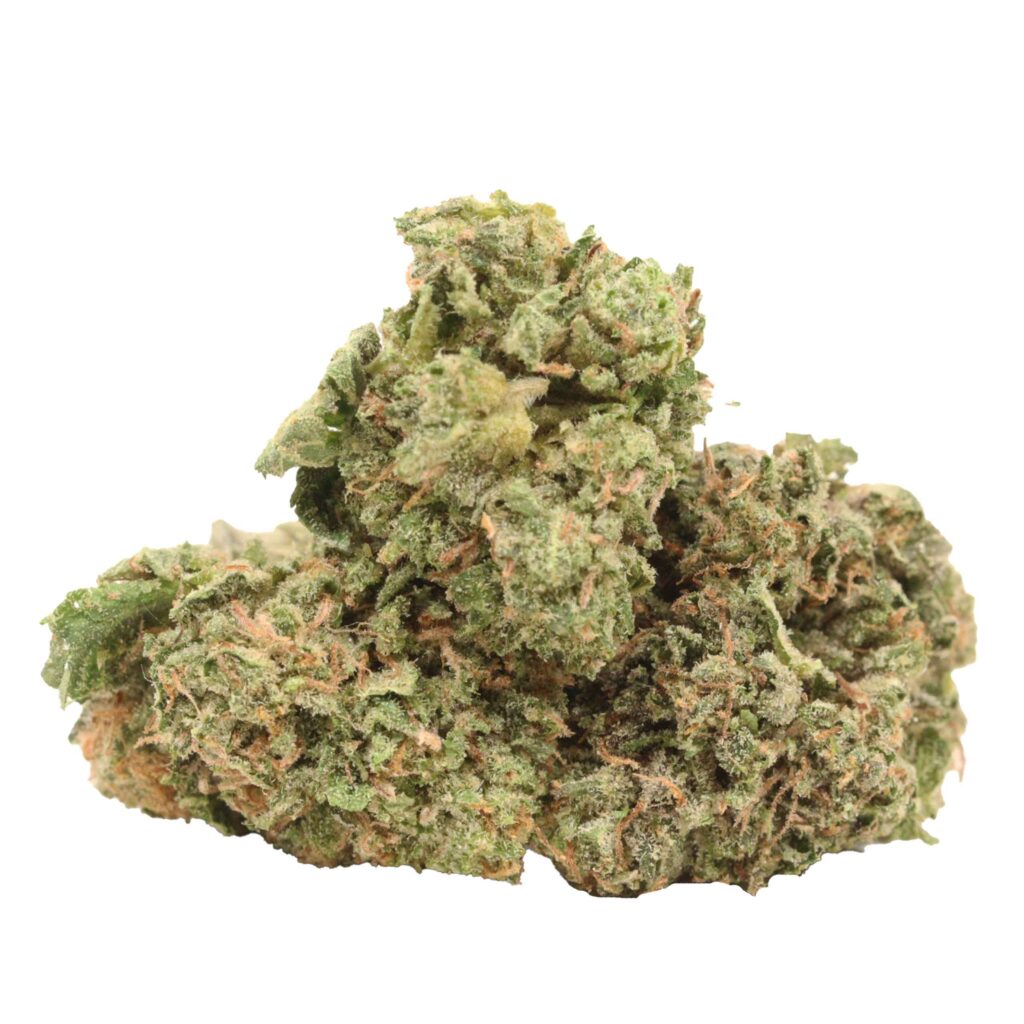
Cannabis Entourage Effect Explained: THC, CBD, Terpenes & What Science Says
If you have ever wondered why different cannabis products can feel different even when they contain similar amounts of THC, the answer may involve more than just THC. The cannabis entourage effect is one possible explanation researchers have been investigating.
Cannabis contains hundreds of naturally occurring compounds, including cannabinoids such as THC and CBD, aromatic compounds called terpenes, and other plant chemicals. Researchers have been investigating whether these compounds interact with each other and influence the overall effects of cannabis.
This concept is commonly known as the cannabis entourage effect.
But how much of the entourage effect is actually supported by science? Do THC, CBD, and terpenes really work better together? And does a full-spectrum cannabis product necessarily provide a different experience from an isolated cannabinoid?
Let’s take a closer look at what researchers know so far.
What Is the Cannabis Entourage Effect?
The cannabis entourage effect is the theory that multiple compounds in cannabis may interact with one another and influence the effects produced by the plant.
Instead of looking at THC, CBD, terpenes, and other compounds individually, the entourage effect considers cannabis as a complex mixture of chemicals that may work together.
These interactions could potentially be:
- Additive: The effects of different compounds simply add together.
- Synergistic: The combined effect is greater than expected from the individual compounds.
- Antagonistic: One compound reduces or changes the effect of another.
- Independent: Compounds produce effects without significantly influencing each other.
The important point is that the cannabis entourage effect is still an area of scientific investigation. Although researchers have identified interactions between cannabis compounds, it has not been established that every cannabis product produces a predictable entourage effect.
THC and the Entourage Effect
THC, or tetrahydrocannabinol, is the primary intoxicating cannabinoid in cannabis.
THC interacts with the body’s endocannabinoid system, particularly cannabinoid receptors such as CB1. These interactions contribute to many of the effects associated with THC.
Because THC has such noticeable effects, researchers have investigated whether other cannabis compounds can modify its activity. This is one reason THC is central to discussions about the cannabis entourage effect.
One of the most frequently discussed combinations is THC and CBD.
Research suggests that CBD can influence certain effects of THC under some conditions. However, the relationship is more complicated than the popular idea that CBD simply “balances out” THC.
The outcome can depend on factors such as the amount of THC and CBD, their ratio, timing, method of consumption, and individual differences.
Therefore, it is inaccurate to assume that adding CBD will always cancel out or reduce the effects of THC.
CBD and the Entourage Effect
CBD, or cannabidiol, is another major cannabinoid found in cannabis.
Unlike THC, CBD is not considered intoxicating in the same way. It interacts with several biological systems and has attracted significant scientific interest.
The interaction between THC and CBD is one of the better-studied examples of potential cannabinoid interaction and is an important part of understanding the THC and CBD entourage effect.
However, studies have produced mixed findings. Some research suggests CBD can alter certain effects of THC, while other research has found limited or inconsistent effects.
This variation is important because it shows why the cannabis entourage effect cannot be reduced to a simple formula such as:
THC + CBD = better effects.
The relationship between cannabinoids can depend on dose, concentration, timing, formulation, and individual response.
What Are Cannabis Terpenes?
Terpenes are naturally occurring aromatic compounds found throughout the plant kingdom.
In cannabis, terpenes contribute significantly to the plant’s distinctive aroma and flavor. Different cannabis varieties can contain different combinations and concentrations of terpenes.
Some commonly discussed cannabis terpenes include:
- Myrcene
- Limonene
- Linalool
- Alpha-pinene
- Beta-pinene
- Beta-caryophyllene
Terpenes are not unique to cannabis. They are also found in many fruits, herbs, flowers, and other plants.
Scientists are interested in cannabis terpenes because many of them have biological activity of their own. This has led researchers to investigate whether they might interact with cannabinoids and contribute to the entourage effect.
However, biological activity by itself does not prove that a terpene creates a specific cannabis effect when combined with THC or CBD.
Do Terpenes Actually Enhance THC?
This is one of the most debated parts of the entourage effect theory.
A popular explanation suggests that terpenes can influence the way THC works, potentially changing the overall cannabis experience. This proposed interaction is frequently included in explanations of the cannabis entourage effect.
There is some scientific interest in this possibility, but the evidence does not support a simple rule that terpenes always make THC stronger.
Laboratory studies investigating common cannabis terpenes have not found clear evidence that they directly activate cannabinoid receptors or consistently modify THC signaling through those receptors.
This does not mean terpenes are irrelevant.
It means that scientists still need to determine exactly how individual terpenes might interact with cannabinoids, whether those interactions occur at realistic concentrations, and whether they have meaningful effects in humans.
How Do THC, CBD, and Terpenes Work Together?
The potential interaction between THC, CBD, and terpenes is what makes the cannabis entourage effect particularly interesting.
Each compound has its own chemical properties and biological targets. When several compounds are present simultaneously, their effects may overlap or interact.
For example, two compounds could affect the same biological pathway, while another compound could influence a completely different pathway.
However, the presence of multiple compounds does not automatically mean that they will work synergistically.
In science, synergy has a specific meaning. Researchers need controlled experiments to determine whether a combined effect is actually greater than the effects of the individual compounds.
This is one reason why more research is needed before broad claims can be made about the cannabis entourage effect.
Full-Spectrum Cannabis and the Entourage Effect
The entourage effect is frequently discussed in connection with full-spectrum cannabis products.
A full-spectrum preparation generally contains multiple naturally occurring cannabis compounds rather than focusing on a single isolated cannabinoid.
Depending on the product, this may include:
- THC
- CBD
- Minor cannabinoids
- Terpenes
- Other naturally occurring plant compounds
An isolate, on the other hand, is designed to contain primarily one specific compound.
The theory behind full-spectrum products is that keeping multiple compounds together may preserve interactions that would not occur with an isolated cannabinoid. This concept is closely associated with the cannabis entourage effect.
Some laboratory and preclinical research has found differences between whole-plant preparations and isolated cannabinoids. However, these findings do not establish that full-spectrum products are universally more effective or better than isolates.
What Does Science Say About the Entourage Effect?
The most accurate scientific answer is that the cannabis entourage effect is plausible, but its full significance has not been conclusively established.
Researchers have identified biological interactions involving cannabinoids and other cannabis compounds. At the same time, studies have produced conflicting results, and some proposed mechanisms have not been supported by laboratory experiments.
Several challenges make the subject difficult to study.
Cannabis Chemistry Varies
Cannabis products can have dramatically different chemical profiles.
Two products may contain similar amounts of THC but very different concentrations of CBD, minor cannabinoids, and terpenes.
This makes it difficult to compare products or determine which compounds are responsible for particular effects and how those differences relate to the cannabis entourage effect.
Dose Matters
The amount of each compound can influence its activity.
A terpene that produces an effect at a high laboratory concentration may not produce the same effect at the much lower concentration found in a typical cannabis product.
Consumption Method Matters
How cannabis compounds enter the body can also influence their effects.
Inhaled and oral cannabis products, for example, can produce different absorption patterns and timing. These differences can make the entourage effect difficult to study consistently.
Individual Response Matters
People can respond differently to the same cannabis product.
Factors such as individual biology, previous cannabis exposure, dose, and other variables can influence the experience.
Human Research Is Still Limited
A significant amount of entourage-effect research has involved laboratory experiments, animal studies, or relatively small human studies.
Results from laboratory research can provide valuable clues, but they do not automatically demonstrate that the same effect occurs in people under normal conditions.
What Is Proven and What Is Still a Theory?
Understanding the difference between established evidence and speculation is important when discussing the cannabis entourage effect.
Well Established
- Cannabis contains numerous cannabinoids and other plant compounds.
- THC interacts with the body’s endocannabinoid system.
- CBD interacts with multiple biological targets.
- Terpenes are biologically active compounds.
- Different cannabis products can have substantially different chemical profiles.
- Cannabis compounds can interact with biological systems.
Still Being Investigated
- Whether terpenes consistently enhance the effects of THC.
- Whether CBD reliably changes the effects of THC.
- Whether full-spectrum products consistently outperform isolated cannabinoids.
- Which combinations of cannabinoids and terpenes produce genuine synergy.
- Whether proposed entourage interactions produce meaningful differences in humans.
This distinction is especially important because the term “entourage effect” is sometimes used in cannabis marketing as though it were a proven explanation for every difference between products.
The scientific evidence surrounding the cannabis entourage effect is more nuanced.
Why Is the Entourage Effect Still Debated?
One reason is that cannabis is an unusually complex plant.
There are many different cannabinoids, numerous terpenes, varying concentrations, and different ways of preparing and consuming cannabis.
Researchers also use different experimental methods, making it difficult to compare results directly.
Another issue is the difference between biological interaction and meaningful human effect.
A compound may interact with another compound in a laboratory experiment without producing a noticeable or important difference when consumed by humans. This is a major consideration when evaluating claims about the cannabis entourage effect.
This is why researchers need controlled studies that examine specific combinations, doses, and outcomes.
Does More THC Mean a Stronger Entourage Effect?
Not necessarily.
The cannabis entourage effect is not simply about having more THC.
A product’s overall chemical profile can include THC, CBD, minor cannabinoids, terpenes, and other compounds. Increasing one compound does not automatically create a stronger interaction among all of them.
It is also important to remember that stronger intoxicating effects are not the same thing as a stronger entourage effect.
The two concepts should not be treated as interchangeable.
Does More Terpene Mean a Better Cannabis Experience?
Not necessarily.
Terpene concentration is only one part of a cannabis product’s chemical profile.
A higher terpene concentration does not automatically mean a product will produce a better or more desirable experience. Different people may also respond differently to the same chemical profile.
Terpenes can be useful for understanding the aroma and composition of a cannabis product, but they should not be treated as guaranteed predictors of its effects or as definitive proof of the cannabis entourage effect.
Common Cannabis Entourage Effect Myths
Myth 1: The Entourage Effect Is Completely Proven
The idea has scientific support in some areas, but the broader claim that cannabis compounds consistently work together to create superior effects has not been conclusively demonstrated.
Myth 2: CBD Always Cancels Out THC
CBD does not simply cancel THC.
Research indicates that CBD can influence certain effects of THC under some circumstances, but results vary depending on factors such as dose and ratio.
Myth 3: Terpenes Always Make THC Stronger
There is not enough evidence to make this claim.
Some terpenes may interact with biological systems, but researchers have not established a universal mechanism in which cannabis terpenes consistently increase THC’s effects.
Myth 4: Full-Spectrum Products Are Always Better
Full-spectrum and isolated cannabinoids are different formulations, but there is not enough evidence to conclude that one is universally better for everyone.
Myth 5: Terpenes Can Predict Exactly How Cannabis Will Feel
Terpenes are one component of cannabis chemistry.
They may contribute to the overall characteristics of a product, but they cannot reliably predict every individual’s response or provide a complete explanation of the cannabis entourage effect.
Why the Entourage Effect Matters
Even though researchers are still investigating the theory, the cannabis entourage effect has encouraged a broader way of thinking about cannabis.
Instead of focusing exclusively on THC percentage, researchers and consumers can consider the complete chemical profile of a product.
This includes cannabinoids, minor cannabinoids, terpenes, formulation, concentration, and method of consumption.
That broader perspective may become increasingly important as cannabis research develops and scientists learn more about how individual compounds interact.
What Does the Future of Entourage Effect Research Look Like?
Future research will need to move beyond broad claims and examine specific combinations of compounds under controlled conditions.
Researchers may investigate questions such as:
- Which cannabinoids interact with each other?
- Which terpenes have measurable effects at realistic concentrations?
- Do particular cannabinoid combinations produce synergy?
- How do different THC-to-CBD ratios affect outcomes?
- Do findings from laboratory studies translate to humans?
- How does the chemical profile of a product influence its effects?
Better-designed clinical studies could help separate genuine pharmacological interactions from assumptions based on anecdotal experiences or marketing claims. This research may ultimately provide a clearer understanding of the cannabis entourage effect.
Cannabis Entourage Effect Explained: The Bottom Line
The cannabis entourage effect describes the idea that THC, CBD, terpenes, minor cannabinoids, and other cannabis compounds may interact and influence the overall effects of cannabis.
There is scientific evidence that cannabis compounds can interact with biological systems, and some studies suggest that combinations of compounds may behave differently from isolated compounds.
However, the stronger claim that all cannabis compounds work together synergistically, or that full-spectrum cannabis is always superior to isolated cannabinoids, has not been firmly established.
The best way to understand the cannabis entourage effect is therefore to see it as an active area of cannabis research rather than a proven universal rule.
As research continues, scientists may gain a clearer understanding of which cannabis compounds interact, how those interactions occur, and whether they make a meaningful difference in humans.