THCA Flower Buying Guide: How to Choose Potency, Strain, Terpenes & Quality
Choosing the right THCA flower can be confusing when products vary in potency, appearance, aroma, and reported effects. A reliable THCA Flower Buying Guide should help you compare these details without relying on marketing claims alone.
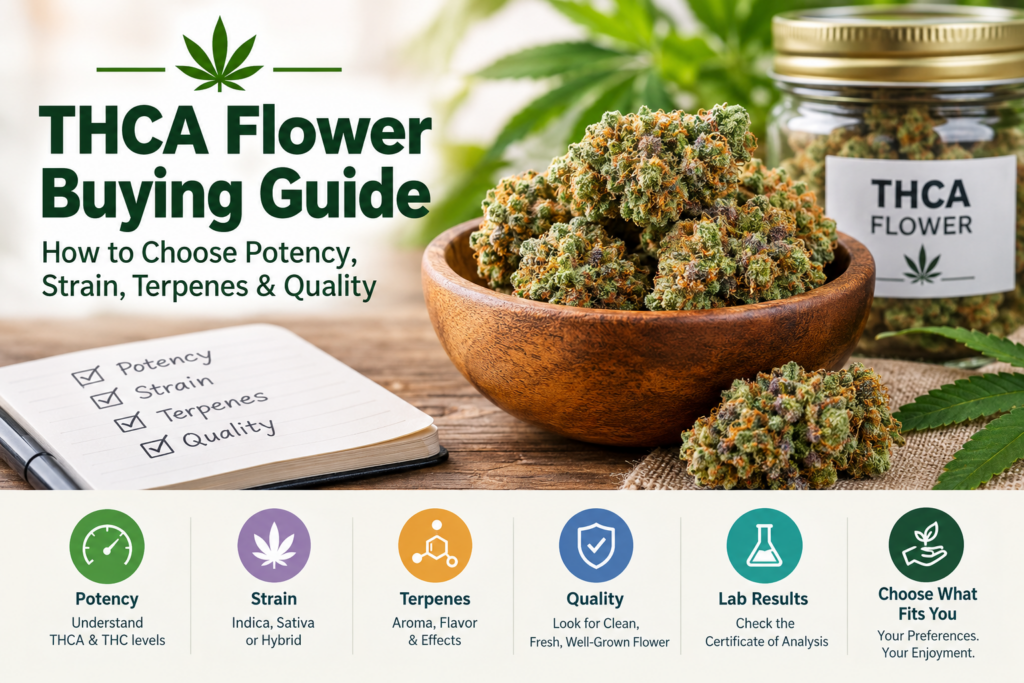
Whether you are comparing strains, checking lab results, or looking for a product that matches your preferences, the key is to evaluate the whole product rather than focusing on THC percentage alone. This THCA Flower Buying Guide explains what to look for when choosing THCA flower, including potency, strain type, terpenes, quality, and storage.
What Is THCA Flower?
THCA flower is cannabis flower that contains tetrahydrocannabinolic acid, commonly called THCA. THCA is the non-intoxicating precursor to THC found in raw cannabis. When exposed to heat, THCA can convert into THC, which is responsible for the intoxicating effects associated with cannabis.
Because of this conversion, THCA flower is often marketed as a hemp-derived product with THC-related characteristics. However, the legal status, allowable THC limits, and purchasing requirements can vary by location. Always check the laws where you live before ordering. This THCA Flower Buying Guide is intended for general product education, not a guarantee of legal eligibility.
1. Check Potency Before Choosing THCA Flower
Potency is one of the first things many buyers consider, but it should not be the only deciding factor. A higher reported THCA percentage does not automatically mean a product is better quality. This THCA Flower Buying Guide recommends comparing potency alongside laboratory testing and product information.
When comparing THCA flower, look for:
- THCA percentage: The amount of THCA reported in the product.
- Total THC: The reported THC content, which may include THC already present in the flower.
- Batch-specific testing: Results that correspond to the actual product or batch.
- Clear labeling: A certificate of analysis that is easy to understand.
A useful THCA Flower Buying Guide should also explain that laboratory results and product quality are not the same thing. Potency is one measurement, while freshness, cleanliness, and overall quality require additional checks.
2. Understand the Difference Between Strains
Strain names are useful for identifying products, but they should not be treated as guarantees of a specific experience. Different products with the same strain name may vary in genetics, cultivation, and chemical composition. This THCA Flower Buying Guide encourages buyers to compare the actual product profile rather than relying on a name alone.
When comparing strains, consider:
- Genetic background: Whether the product is described as indica, sativa, or hybrid.
- Cannabinoid profile: The reported THCA, THC, CBD, and other cannabinoids.
- Terpene profile: The aromatic compounds found in the flower.
- Personal preferences: Aroma, flavor, appearance, and desired product characteristics.
For example, a buyer who prefers earthy aromas may choose a different strain from someone who prefers citrus or sweet notes. The best choice depends on the product’s actual characteristics rather than the strain label alone. This THCA Flower Buying Guide treats strain names as useful identifiers, not promises of effects.
3. Compare Terpenes and Aroma
Terpenes are naturally occurring aromatic compounds that contribute to the smell and flavor of cannabis. They can help explain why two products with similar potency may have very different aromas. This THCA Flower Buying Guide recommends using terpene information to compare aroma and flavor preferences.
Commonly discussed cannabis terpenes include:
| Terpene | Commonly associated aroma |
|---|---|
| Myrcene | Earthy and herbal |
| Limonene | Citrus and fresh |
| Pinene | Pine-like |
| Caryophyllene | Spicy and peppery |
| Linalool | Floral |
These descriptions are general and do not guarantee a particular effect. A useful THCA Flower Buying Guide should encourage buyers to compare terpene information with their own aroma and flavor preferences.
4. Look for Signs of Quality
Quality is more than appearance. While color, structure, and aroma can provide useful clues, they do not replace laboratory testing or proper product handling. This THCA Flower Buying Guide focuses on evaluating several quality indicators together.
When evaluating THCA flower, check for:
- Fresh appearance: Flower should not look excessively dry, damaged, or poorly handled.
- Aroma: A natural, noticeable scent is generally more useful than a vague product description.
- Trichome coverage: Visible trichomes can be a sign of resin production, but appearance alone does not confirm potency.
- Clean presentation: Avoid products with obvious contamination, unusual odors, or poor packaging.
- Consistent information: Product descriptions, labels, and lab results should not contradict one another.
If a product has an unusually strong chemical smell, visible mold, or other signs of contamination, it should not be used. This THCA Flower Buying Guide emphasizes that safety and product condition matter as much as appearance.
5. Read the Certificate of Analysis
A certificate of analysis, or COA, is one of the most important tools for evaluating cannabis products. It provides laboratory-reported information about the tested batch. This THCA Flower Buying Guide recommends checking the COA before making a purchase decision.
A COA may include:
- Cannabinoid concentrations
- Potency results
- Contaminant testing
- Pesticide screening
- Heavy metal testing
- Microbial testing
- Batch or sample identification
When reviewing a COA, check whether the report matches the product you are considering. A laboratory result from a different batch may not accurately represent the flower currently being sold. This THCA Flower Buying Guide treats matching batch information as an important part of product evaluation.
6. Consider Cultivation and Processing
How flower is grown, harvested, dried, and stored can affect its final characteristics. While growing methods do not guarantee a particular experience, they can help explain differences between products. This THCA Flower Buying Guide recommends considering cultivation and handling details alongside potency and strain information.
Important details to look for include:
- Cultivation method: Indoor, outdoor, or greenhouse-grown.
- Harvest information: Whether the product has a clear harvest or batch date.
- Curing: Proper curing can help preserve aroma and improve the overall smoking experience.
- Storage: Packaging should protect the flower from excessive heat, moisture, and light.
A product with clear cultivation and handling information is generally easier to evaluate than one with vague or incomplete details. This THCA Flower Buying Guide encourages buyers to look for transparent product information before ordering.
7. Choose the Right Product for Your Preferences
The best THCA flower is not necessarily the product with the highest potency or the most expensive price. It is the product that matches your preferences and has reliable information to support the purchase. This THCA Flower Buying Guide recommends comparing the full product profile rather than choosing by price alone.
Before choosing, ask yourself:
- Do I prefer a stronger or milder product?
- Which aromas and flavors do I enjoy?
- Do I want to compare indica, sativa, or hybrid varieties?
- Does the product have a recent, matching COA?
- Is the packaging suitable for preserving freshness?
- Does the seller provide clear product information?
Taking a few minutes to compare these details can make it easier to choose a product that fits your needs. A THCA Flower Buying Guide is most useful when it helps you make a decision based on clear, relevant information.
THCA Flower Buying Guide: Common Mistakes to Avoid
Even experienced buyers can make mistakes when comparing cannabis products. Here are some common issues to watch for. This THCA Flower Buying Guide highlights these mistakes so you can evaluate products more carefully.
Choosing Only by THC Percentage
Potency is important, but it does not tell you everything about a product. Aroma, cannabinoid profile, freshness, and laboratory testing also matter. A balanced THCA Flower Buying Guide should explain why these factors deserve attention.
Ignoring the Batch Information
A product description may look appealing, but the COA should match the batch being sold. Always check the testing date and product identification when available. This THCA Flower Buying Guide recommends verifying batch details before relying on a laboratory result.
Assuming Strain Names Guarantee Effects
Strain names are not a substitute for actual product information. Two products with the same name may have different cannabinoid and terpene profiles. This THCA Flower Buying Guide encourages buyers to compare the details behind the label.
Overlooking Storage and Freshness
Even a well-produced flower can lose quality if it is stored improperly. Look for packaging that helps protect the product from moisture, heat, and light. This THCA Flower Buying Guide considers storage information an important part of a complete product assessment.
Final Thoughts
A good THCA Flower Buying Guide should help you make informed decisions based on potency, strain characteristics, terpenes, laboratory testing, and overall quality. Instead of choosing a product based on one number or a popular name, compare the full product profile.
By checking the COA, understanding the strain, evaluating aroma and appearance, and considering storage and cultivation details, you can make a more confident choice when shopping for THCA flower. Use this THCA Flower Buying Guide as a practical checklist whenever you compare products.