
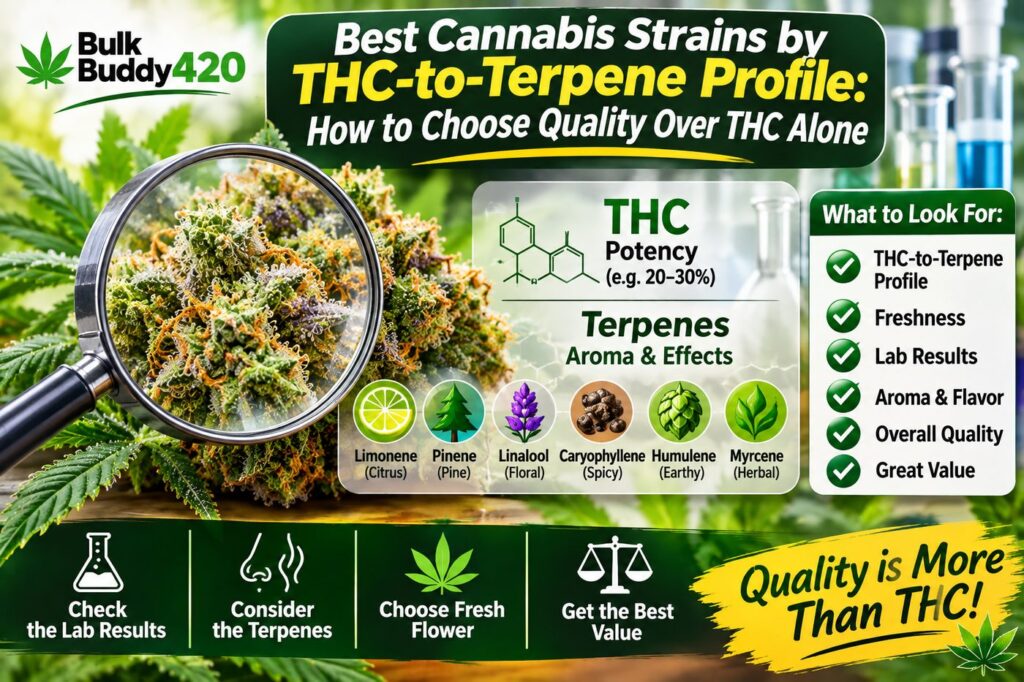
Best Cannabis Strains by THC-to-Terpene Profile: How to Choose Quality Over THC Alone
When comparing cannabis strains, THC percentage is often one of the first details consumers notice. However, potency is only one part of flower quality. A THC-to-terpene profile provides additional information about a product’s cannabinoid content and aromatic compounds, helping buyers make a more complete comparison instead of choosing based on THC alone.
Two cannabis products can have similar THC percentages but noticeably different terpene compositions, aromas, and overall characteristics. Understanding the THC-to-terpene profile can help consumers examine these differences and pay closer attention to product information, freshness, and laboratory testing.
This guide explains how THC and terpenes differ, introduces commonly reported cannabis terpenes, and shows how to evaluate flower using more than a single laboratory number.
1. What Is a THC-to-Terpene Profile?
A THC-to-terpene profile describes two important groups of compounds found in cannabis flower: cannabinoids and terpenes.
THC (tetrahydrocannabinol) is a cannabinoid commonly associated with the intoxicating effects of cannabis. Laboratory reports usually express THC content as a percentage of the product’s weight.
Terpenes are aromatic compounds found in many plants, including cannabis. They contribute to a strain’s smell and flavor characteristics. Different terpene combinations can produce citrus, pine, floral, herbal, earthy, or spicy aromas.
Looking at both categories provides more information than considering THC alone. A product’s THC-to-terpene profile can help describe its measured cannabinoid potency alongside its reported aromatic composition.
It is important to remember that a terpene profile does not guarantee a particular experience or effect. Individual responses vary, and research into how specific terpene combinations interact with cannabinoids is still developing.
2. Why THC Percentage Alone Does Not Determine Quality
THC percentage is useful information, but it should not be treated as a complete quality score. A flower product with a high THC result is not automatically fresher, better cultivated, more aromatic, or more carefully processed than a product with a lower result.
Reviewing the THC-to-terpene profile alongside other product details gives buyers a broader basis for comparison.
Potency Does Not Measure Freshness
A laboratory THC result does not tell you how recently the flower was harvested, how carefully it was cured, or how it was stored. Freshness and storage conditions influence the product’s overall condition.
THC Does Not Describe Aroma
THC percentage does not explain whether a strain has citrus, pine, floral, earthy, or sweet aromatic characteristics. Terpene information provides a separate way to understand the product’s aromatic composition.
High THC Does Not Guarantee Better Cultivation
Cultivation practices, harvesting, drying, trimming, curing, and storage all contribute to the finished flower. A high potency number cannot independently verify these processes.
Laboratory Results Need Context
A reported THC percentage should be considered alongside the batch number, testing date, terpene results, and other available product information. The THC-to-terpene profile is one part of this wider evaluation.
3. Understanding Common Cannabis Terpenes
Terpenes help explain why cannabis strains can have different aromas and flavors. The following compounds are commonly reported in cannabis laboratory profiles.
Myrcene – Earthy and Herbal
Myrcene is commonly associated with earthy, herbal, and musky aromas. It is also found in other plants. When examining a THC-to-terpene profile, myrcene results can help describe part of the flower’s aromatic composition.
Its presence does not guarantee a particular physical or psychological effect. Concentration and the presence of other compounds should also be considered.
Limonene – Citrus and Fresh Notes
Limonene is associated with citrus-like aromas, including lemon and orange notes. It is also found in citrus fruit peels. A strain with measurable limonene may have a noticeable citrus component in its aromatic profile.
The actual smell can still depend on the concentration of other compounds and the condition of the flower.
Caryophyllene – Peppery and Spicy
Beta-caryophyllene is associated with peppery, woody, and spicy aromas. It is also found in plants such as black pepper and cloves. Its presence can contribute to the overall aromatic character of a cannabis strain.
Pinene – Pine and Forest-Like Notes
Pinene is commonly associated with pine and fresh forest aromas. It occurs naturally in several plants, including pine trees and herbs. It can contribute to the aromatic characteristics recorded in a product’s terpene results.
Linalool – Floral and Lavender Notes
Linalool is associated with floral and lavender-like aromas. It is also found in plants such as lavender. In cannabis flower, it can contribute to a more floral aromatic profile, depending on its concentration and the presence of other terpenes.
Humulene – Woody and Earthy Notes
Humulene is associated with earthy, woody, and herbal aromas. It is also present in hops and can contribute to the overall complexity of a strain’s aromatic profile.
For a deeper scientific explanation of cannabis aromatic compounds, read this scientific review of cannabis terpenes.
4. Cannabis Strains Commonly Discussed for Their Profiles
Strain names can provide a starting point for research, but they should not be treated as guarantees of a particular THC percentage or terpene composition. Actual results can vary between cultivators, batches, and growing conditions.
When comparing a THC-to-terpene profile, use strain descriptions as a starting point and check the specific product’s laboratory results whenever available.
Blue Dream
Blue Dream is a well-known hybrid strain often described with sweet berry and herbal aromatic characteristics. Its actual cannabinoid and terpene composition should be checked through the specific product’s laboratory results.
Sour Diesel
Sour Diesel is commonly associated with pungent, fuel-like, and citrus-related aromatic descriptions. Consumers interested in its profile should look for batch-specific terpene information rather than relying on the strain name alone.
OG Kush
OG Kush is often described with earthy, pine, and fuel-like aromatic characteristics. Its specific composition can vary depending on the genetics and cultivation practices used.
Girl Scout Cookies
Girl Scout Cookies is commonly associated with sweet, earthy, and sometimes mint-like aromatic descriptions. Its actual terpene composition can differ across products sold under the same strain name.
Wedding Cake
Wedding Cake is often described with sweet, earthy, and dessert-like aromatic notes. Comparing laboratory results can help distinguish between products with similar strain names.
Northern Lights
Northern Lights is a recognized strain commonly associated with earthy and herbal aromatic characteristics. The product’s actual freshness and laboratory profile should still be evaluated independently.
Important: These are general strain descriptions, not verified laboratory results for every product. A strain name alone cannot establish the exact THC-to-terpene profile of a particular batch.
5. How to Read a Cannabis THC and Terpene Laboratory Report
A laboratory report can help consumers understand what has been measured in a particular cannabis batch. Reviewing the THC-to-terpene profile means looking beyond the headline potency figure and checking the available supporting information.
Total THC
Total THC is commonly reported as a percentage. It helps describe the product’s measured cannabinoid potency, but it is not a complete measurement of flower quality.
Total Terpenes
Some laboratory reports provide a total terpene percentage or concentration. This gives an indication of the measured terpene content in the tested sample.
A higher total terpene result does not automatically mean a better product. The individual compounds, aroma, freshness, and overall condition also matter.
Individual Terpene Results
Look beyond the total number. Check whether the report identifies myrcene, limonene, caryophyllene, pinene, linalool, humulene, or other compounds. These details help explain the product’s measured aromatic composition.
Batch or Lot Number
The laboratory report should correspond to the product being sold. A report from a different batch cannot reliably describe the exact product in front of you.
Testing Date and Laboratory
Check the testing date and identify the laboratory responsible for the results. Where required, confirm that the laboratory is appropriately licensed or accredited under the applicable local regulations.
Contaminant Screening
Depending on applicable testing requirements, reports may include screening for pesticides, heavy metals, microbial contaminants, mycotoxins, and residual solvents.
A cannabinoid and terpene report does not replace contaminant testing. Both types of information can be important when evaluating a product.
6. How to Choose Quality Over THC Alone
Consumers comparing cannabis flower can use a broader checklist rather than focusing on potency alone. A complete THC-to-terpene profile review should be considered alongside the product’s condition and supporting documentation.
1. Compare the Complete Cannabinoid Profile
Look beyond the headline THC percentage. Review the available cannabinoid information and make sure the results correspond to the product’s batch.
2. Examine the Terpene Composition
Check which terpenes are present and their reported concentrations. This helps you understand the product’s aromatic characteristics rather than relying on general strain descriptions.
3. Consider Freshness
Review packaging information and examine the flower’s condition. Avoid products showing visible mold, unusual discoloration, or suspicious musty odors.
4. Check Cultivation and Processing Information
Where available, consider details about cultivation methods, harvesting, drying, curing, and packaging. These stages influence the finished product and help provide context for laboratory results.
5. Verify Laboratory Documentation
Look for batch-specific test results and appropriate contaminant screening. Do not rely on an unrelated laboratory report or an unsupported potency claim.
6. Compare Value Rather Than Price Alone
A higher-priced product is not automatically better. Consider the available product information, condition, freshness, and testing when assessing whether its price represents value.
7. THC-to-Terpene Profile vs. THC-Only Comparison
Comparing THC alone gives a limited view of a cannabis product. Reviewing the THC-to-terpene profile provides additional information about its reported aromatic composition.
| Comparison factor | THC-only approach | Complete profile approach |
|---|---|---|
| Potency | Focuses on THC percentage | Reviews THC alongside other cannabinoids |
| Aroma | Not explained by THC | Considers individual terpenes |
| Freshness | Not established | Examines packaging and product condition |
| Product quality | Cannot be determined from THC alone | Considers several quality indicators |
| Laboratory information | Focuses on potency | Reviews cannabinoid, terpene, and contaminant results |
| Value | May prioritize the highest number | Compares the complete product information |
A complete profile offers more context for evaluating cannabis flower. It does not guarantee a particular experience, but it can help buyers make better-informed comparisons.
8. Common Mistakes When Comparing Cannabis Strains
Choosing the Highest THC Percentage
One common mistake is assuming that the highest THC number automatically represents the best product. Potency is only one characteristic, and a broader THC-to-terpene profile comparison can provide additional context.
Ignoring Terpene Information
A product’s aroma and flavor characteristics are not described by THC percentage. Ignoring terpene information leaves out another part of the product’s chemical profile.
Assuming Strain Names Guarantee Identical Results
The same strain name can appear on products with different cannabinoid and terpene results. Genetics, cultivation, and batch differences matter.
Confusing Marketing Claims With Verified Results
Words such as premium, exotic, top shelf, and high potency are not substitutes for batch-specific laboratory documentation.
Overlooking Storage and Packaging
Even a product with an appealing laboratory profile can lose quality if it is poorly stored or handled. Packaging and storage information should be part of the comparison.
9. Frequently Asked Questions
Is a higher THC percentage always better?
No. THC percentage describes one part of the cannabinoid profile. It does not independently measure freshness, aroma, cultivation quality, or the presence of contaminants.
What is the difference between THC and terpenes?
THC is a cannabinoid, while terpenes are aromatic compounds. THC is commonly measured as part of a product’s potency information, whereas terpenes help describe its aromatic composition.
Which cannabis terpene is the strongest?
There is no single terpene that can universally be described as the strongest. Terpene concentration and aromatic characteristics vary by product, and their presence does not establish a guaranteed effect.
Does a high terpene percentage mean better flower?
Not automatically. Total terpene content is one measurement, but individual compounds, freshness, aroma, cultivation, and overall product condition also matter.
Can two strains have the same THC percentage but different terpene profiles?
Yes. Two products can report similar THC levels while having different terpene compositions. This is one reason to review the complete THC-to-terpene profile instead of comparing THC alone.
How do I verify a cannabis strain’s terpene profile?
Look for a laboratory report that identifies the individual terpenes and matches the product’s batch or lot number. Check the testing date and laboratory information as well.
Final Thoughts
Choosing cannabis flower based on THC percentage alone can leave out important information. Cannabinoid content, terpene composition, freshness, cultivation, storage, and laboratory testing all contribute to a more complete product comparison.
Understanding the THC-to-terpene profile can help consumers look beyond the headline potency number and examine the complete information available for a product. It is a more useful starting point for comparing aromatic composition and cannabinoid results, although it does not guarantee a particular experience or establish overall quality by itself.
Examine the full laboratory report, understand the aromatic characteristics, check batch information, and consider the actual condition of the flower. Quality is not established by one number. A more informed comparison considers the complete product and the evidence available to support its claims.