
How Much Does Weed Cost in 2026? 7 Smart Tips
Understanding cannabis prices can be confusing because the amount you buy, product quality, potency, brand, location, taxes, and product type can all change the final price. If you are comparing dispensary menus or simply trying to understand the current market, knowing typical price ranges makes it easier to spot good value.
In this guide, we break down How Much Does Weed Cost in 2026? by quantity, quality, and product type, while also explaining the main factors that can make one cannabis product considerably more expensive than another.
How Much Does Weed Cost in 2026? Cannabis Prices at a Glance
So, How Much Does Weed Cost in 2026? There is no single nationwide price. Cannabis prices can range from inexpensive flower sold in larger quantities to premium flower and highly processed concentrates that cost considerably more.
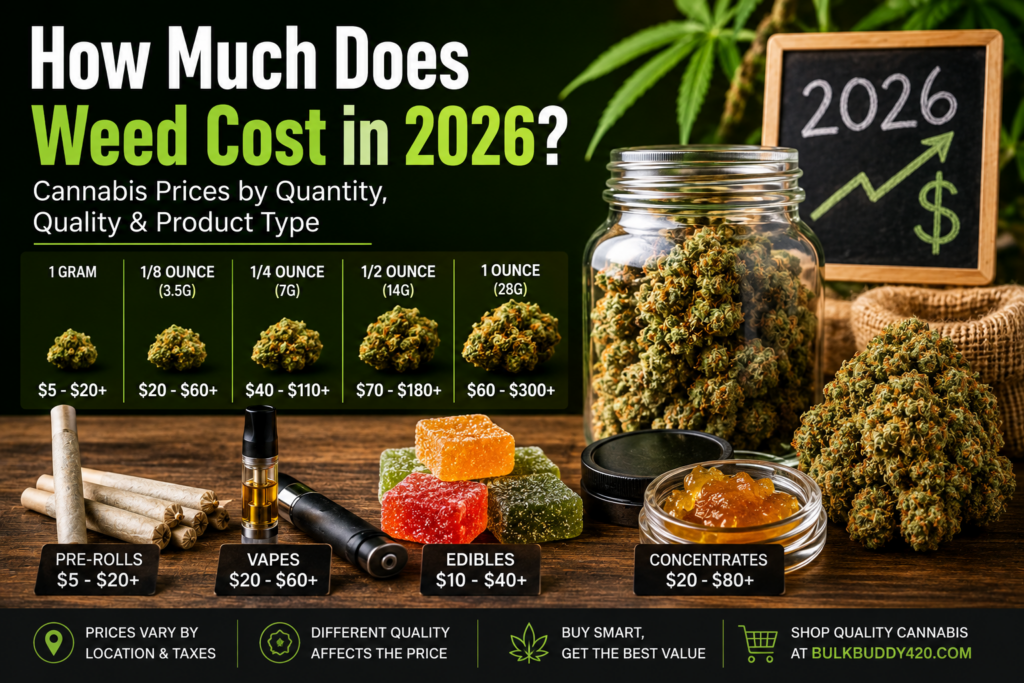
As a broad guide, typical cannabis prices can look like this:
| Quantity or Product | Typical Price Range |
|---|---|
| 1 gram of flower | $5–$20+ |
| 3.5 grams (eighth) | $20–$60+ |
| 7 grams (quarter) | $40–$110+ |
| 14 grams (half-ounce) | $70–$180+ |
| 28 grams (ounce) | $60–$300+ |
| Pre-roll | $5–$20+ |
| Vape cartridge | $20–$60+ |
| Edibles | $10–$40+ |
| Concentrates | $20–$80+ per gram |
These figures are broad estimates rather than fixed national prices. Actual costs can vary substantially depending on location, taxes, quality, brand, potency, availability, supply and demand, and local regulations.
How Much Does Weed Cost in 2026? Understanding an Eighth
One of the most common cannabis quantities is an eighth, which contains 3.5 grams of flower. For many consumers, an eighth offers a practical balance between price and quantity.
How Much Does Weed Cost in 2026? Eighth Prices
An eighth can commonly cost around $20 to $60 or more. Budget flower may be available near the lower end, while premium or craft cannabis can cost considerably more.
When comparing eighths, do not look at the sticker price alone. Check the weight, flower quality, freshness, potency, cultivation method, and whether taxes are already included in the listed price.
How Much Does Weed Cost in 2026? Quarter Prices
A quarter contains 7 grams of cannabis flower. Buying this amount can provide a lower effective cost per gram than purchasing smaller quantities.
For How Much Does Weed Cost in 2026? comparisons, a quarter can often fall somewhere around $40 to $110 or more. The exact price depends heavily on the quality tier and market where the cannabis is purchased.
How Much Does Weed Cost in 2026? Half-Ounce Prices
A half-ounce contains 14 grams. Larger quantities frequently have a lower price per gram, although this is not guaranteed.
A broad range for a half-ounce is approximately $70 to $180 or more. Budget flower may fall below this range in some markets, while premium flower can exceed it.
How Much Does Weed Cost in 2026? Ounce Prices
An ounce contains 28 grams and is one of the quantities where price differences between markets become particularly noticeable.
So, How Much Does Weed Cost in 2026? when purchasing an ounce? A broad estimate is approximately $60 to $300 or more. The lower end is generally associated with value-oriented flower and competitive markets, while premium and craft products can command substantially higher prices.
How Much Does Weed Cost in 2026? Ounce Price by Quality
| Quality Level | Approximate Ounce Price |
|---|---|
| Budget | $60–$100 |
| Mid-range | $100–$180 |
| Premium | $180–$250+ |
| Craft/Luxury | $250–$300+ |
Cannabis Prices by Quality
Quality is one of the biggest reasons two products with the same weight can have very different prices. Factors such as appearance, aroma, cannabinoid profile, cultivation practices, trimming, curing, freshness, and overall consistency can influence the price.
Budget Cannabis
Budget cannabis is usually aimed at consumers who prioritize quantity and affordability. It may not have the same visual appeal or premium characteristics as higher-priced flower, but it can still provide a practical option for shoppers who want to control spending.
When considering How Much Does Weed Cost in 2026?, budget flower is usually found toward the lower end of the market’s price range.
Mid-Range Cannabis
Mid-range cannabis generally sits between value flower and premium products. It may offer stronger aroma, better appearance, improved consistency, and more desirable genetics without reaching the highest price tier.
This category is often attractive to consumers who want a balance between quality and cost. Looking at the price per gram can make these products easier to compare.
Premium Cannabis
Premium cannabis can command substantially higher prices because of genetics, cultivation techniques, careful harvesting, curing, trimming, packaging, freshness, and brand positioning.
For anyone researching How Much Does Weed Cost in 2026?, premium flower is an important reminder that weight alone does not determine value.
Does Higher THC Mean More Expensive Weed?
Not necessarily. THC percentage can influence consumer interest, but it is only one factor affecting price. Genetics, terpene profiles, cultivation quality, freshness, brand reputation, production costs, and market demand can all matter.
A product with a slightly lower THC percentage may still be more expensive if it offers desirable genetics, strong aroma, better cultivation quality, or a premium brand experience.
Cannabis Prices by Product Type
How Much Does Weed Cost in 2026? also depends on whether you are buying flower, pre-rolls, vapes, edibles, or concentrates. Different products involve different manufacturing, packaging, testing, and distribution costs.
Cannabis Flower
Flower remains one of the easiest cannabis products to compare by weight. A gram may cost approximately $5 to $20 or more, while larger quantities can provide a lower effective price per gram.
Flower prices are especially sensitive to quality, location, taxes, supply, demand, and brand positioning.
Pre-Rolls
Pre-rolls are convenient because they eliminate the need to grind and prepare flower. Individual pre-rolls can commonly cost around $5 to $20 or more, while multi-packs may range from roughly $15 to $50 or more.
Although pre-rolls can be convenient, their price per gram may be higher than buying loose flower because you are also paying for preparation and packaging.
Cannabis Vapes
Vape cartridges commonly cost around $20 to $60 or more, depending on size, formulation, hardware, potency, brand, and market.
Distillate products can occupy a different price tier from live resin, live rosin, or other premium formulations because the extraction and production processes can differ considerably.
Cannabis Edibles
Edibles often cost approximately $10 to $40 or more per package. Pricing can depend on the cannabinoid formulation, total amount of active cannabinoids, ingredients, brand, packaging, and product type.
When comparing edible prices, it is useful to look at the total cannabinoid content in the package rather than simply comparing package prices.
Cannabis Concentrates
Concentrates can be significantly more expensive per gram than traditional flower. A broad estimate is approximately $20 to $80 or more per gram.
Extraction method, potency, starting material, consistency, purity, brand, and production complexity can all affect concentrate pricing.
Weed Price Per Gram vs. Price Per Ounce
One of the easiest ways to compare cannabis deals is to calculate the effective price per gram. This can reveal whether buying a larger quantity actually provides better value.
For example, an eighth priced at $40 works out to roughly $11.43 per gram. An ounce priced at $160 works out to roughly $5.71 per gram. The larger purchase therefore has a significantly lower effective cost per gram.
However, the lowest price per gram is not automatically the best deal. Cannabis quality, freshness, storage, potency, and personal consumption needs should also be considered.
Why Does Weed Cost So Much?
There is no single explanation for cannabis pricing. Several factors work together to determine what consumers ultimately pay.
Location
Location can have a major impact on cannabis prices. Different markets have different levels of competition, taxation, production capacity, licensing requirements, and consumer demand.
Taxes
Taxes can add a noticeable amount to the final checkout price. A product that appears inexpensive on a menu may cost considerably more after applicable taxes and fees.
Supply and Demand
Supply and demand can influence prices over time. When supply is abundant and competition is strong, retailers may lower prices. Limited availability or strong demand can push prices higher.
Cultivation Costs
Growing cannabis requires resources such as space, lighting, climate control, labor, nutrients, water, security, testing, packaging, and compliance. These expenses can ultimately affect retail pricing.
Quality
Higher-quality cannabis generally requires more attention throughout cultivation, harvesting, drying, curing, trimming, testing, and packaging. Those additional inputs can contribute to higher prices.
Brand
Brand recognition can also affect pricing. Established brands may charge more because of reputation, packaging, consistency, genetics, marketing, and consumer demand.
Is Weed Getting Cheaper in 2026?
How Much Does Weed Cost in 2026? can have a different answer depending on the market being considered. Cannabis prices do not move in exactly the same direction everywhere.
In competitive legal markets, increased cultivation capacity and competition can put downward pressure on some flower prices. At the same time, premium products may remain expensive because consumers are willing to pay for distinctive genetics, quality, freshness, and production methods.
This means consumers may see inexpensive cannabis becoming easier to find while premium products continue occupying higher price tiers.
Legal vs. Unregulated Cannabis Prices
Price comparisons between regulated and unregulated cannabis can be misleading. A lower upfront price does not necessarily mean better value when product testing, labeling, quality control, consumer protections, and legal compliance are considered.
Regulated markets can include costs associated with licensing, testing, taxes, packaging, tracking, and compliance. These expenses may contribute to higher retail prices but are part of the regulated supply chain.
Always understand the laws that apply where you live before purchasing or possessing cannabis.
How to Get the Best Value on Cannabis
If your goal is to spend less without automatically choosing the cheapest product, compare cannabis based on value rather than sticker price alone.
- Compare the price per gram: Larger quantities may offer a lower effective cost per gram.
- Compare quality tiers: Premium flower is not always necessary if your priority is affordability.
- Check the final price: Remember that taxes and other charges can change the checkout total.
- Consider freshness: Older cannabis may not offer the same value as fresher product at a similar price.
- Compare brands: Similar products can have very different prices based on brand positioning.
- Look at the product type: Flower, pre-rolls, vapes, edibles, and concentrates have different pricing structures.
- Buy only what makes sense: A lower price per gram is not useful if you purchase more cannabis than you actually need.
Frequently Asked Questions
How Much Does Weed Cost in 2026?
Broadly, cannabis flower can range from about $5 to $20+ per gram, $20 to $60+ for an eighth, and $60 to $300+ for an ounce. Actual prices vary by market, quality, taxes, brand, potency, and availability.
How Much Is an Eighth of Weed?
An eighth contains 3.5 grams. A broad price range is approximately $20 to $60 or more, with premium products potentially costing substantially more.
How Much Is a Quarter of Weed?
A quarter contains 7 grams. Prices can commonly range from approximately $40 to $110 or more depending on quality and market conditions.
How Much Is a Half-Ounce of Weed?
A half-ounce contains 14 grams. A broad estimate is around $70 to $180 or more, although actual pricing varies considerably between markets.
How Much Is an Ounce of Weed?
An ounce contains 28 grams. Depending on the market and quality tier, an ounce can cost approximately $60 to $300 or more.
Is Buying an Ounce Cheaper Per Gram?
Often, larger quantities have a lower effective price per gram than smaller quantities. However, discounts vary by retailer, brand, market, and product quality.
Why Is Premium Weed More Expensive?
Premium cannabis may cost more because of genetics, cultivation methods, harvesting, curing, trimming, testing, freshness, packaging, brand reputation, and consumer demand.
Does THC Percentage Determine Cannabis Price?
No. THC percentage can influence pricing, but it is only one factor. Genetics, terpene profile, quality, freshness, production methods, brand, and market demand can also affect the final price.
What Is the Cheapest Cannabis Product?
There is no universal cheapest product. Budget flower purchased in larger quantities can provide a relatively low cost per gram, while promotions and market conditions can make other products competitive at different times.
Final Thoughts on How Much Does Weed Cost in 2026?
So, How Much Does Weed Cost in 2026? The most accurate answer is that cannabis prices cover a wide range. Flower can cost only a few dollars per gram in some markets, while premium products and concentrates can cost considerably more.
For a useful comparison, look beyond the headline price. Consider quantity, price per gram, quality, potency, freshness, product type, brand, taxes, and the market where the product is sold.
Ultimately, How Much Does Weed Cost in 2026? depends on what you are buying and where you are buying it. Understanding these variables can help you compare products more intelligently and identify options that provide the right balance between price and quality.